
Research Theme
City Modelling & Sensing
City Modelling & Sensing
Modelling behaviour, sensing urban systems
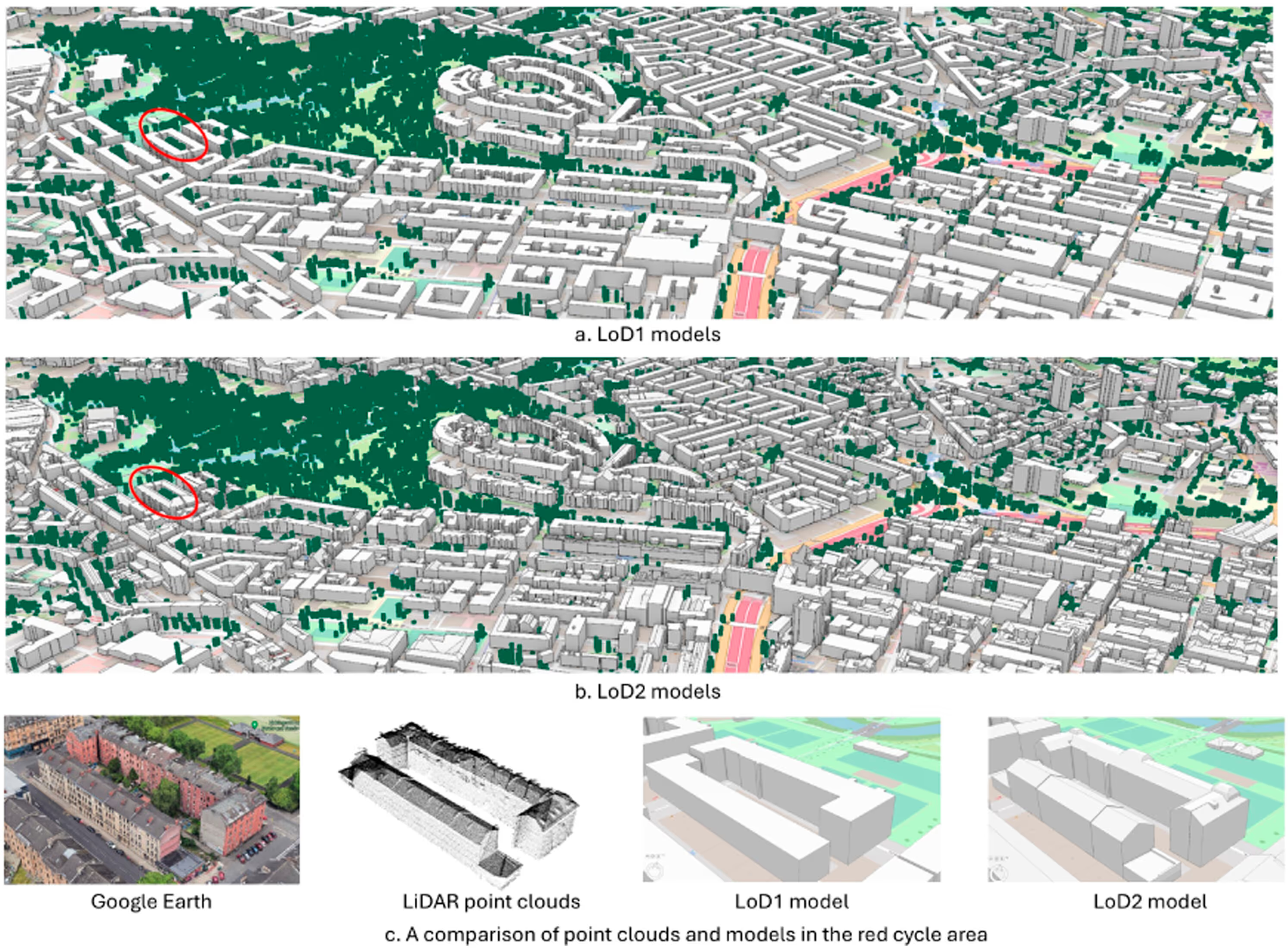
The city modelling and sensing develop methods from computing and AI solving geographical problems, ranging from spatial statistics, uncertainty quantification, exploring the potential of exascale computing to the use of generative and agentic AI. We create robust customised synthetic populations and the development of individual-based models (microsimulation and agent-based modelling) for understanding the consequences on individual behaviour and movement of different policy interventions.
Using sensing technologies, including stationary, portable, street-level and remote sensing, and combined with AI and social survey, we seek answering pressing questions across transport, housing, energy, education, health, environment and sustainability, supporting better city planning aligned with the UN Sustainable Development Goals and global and UK Net Zero targets.
Researchers








%201.svg)
Projects
Explore some of our recent research projects

Sensing Change: Heat and Air Quality in the Gorbals
Exploring how community science and data can reveal the realities of environmental change in Glasgow’s Gorbals.
%201.svg)

Glasgow Low Emission Zone Impact
Glasgow's Open Data Reveals the Impact of Cleaner Transport
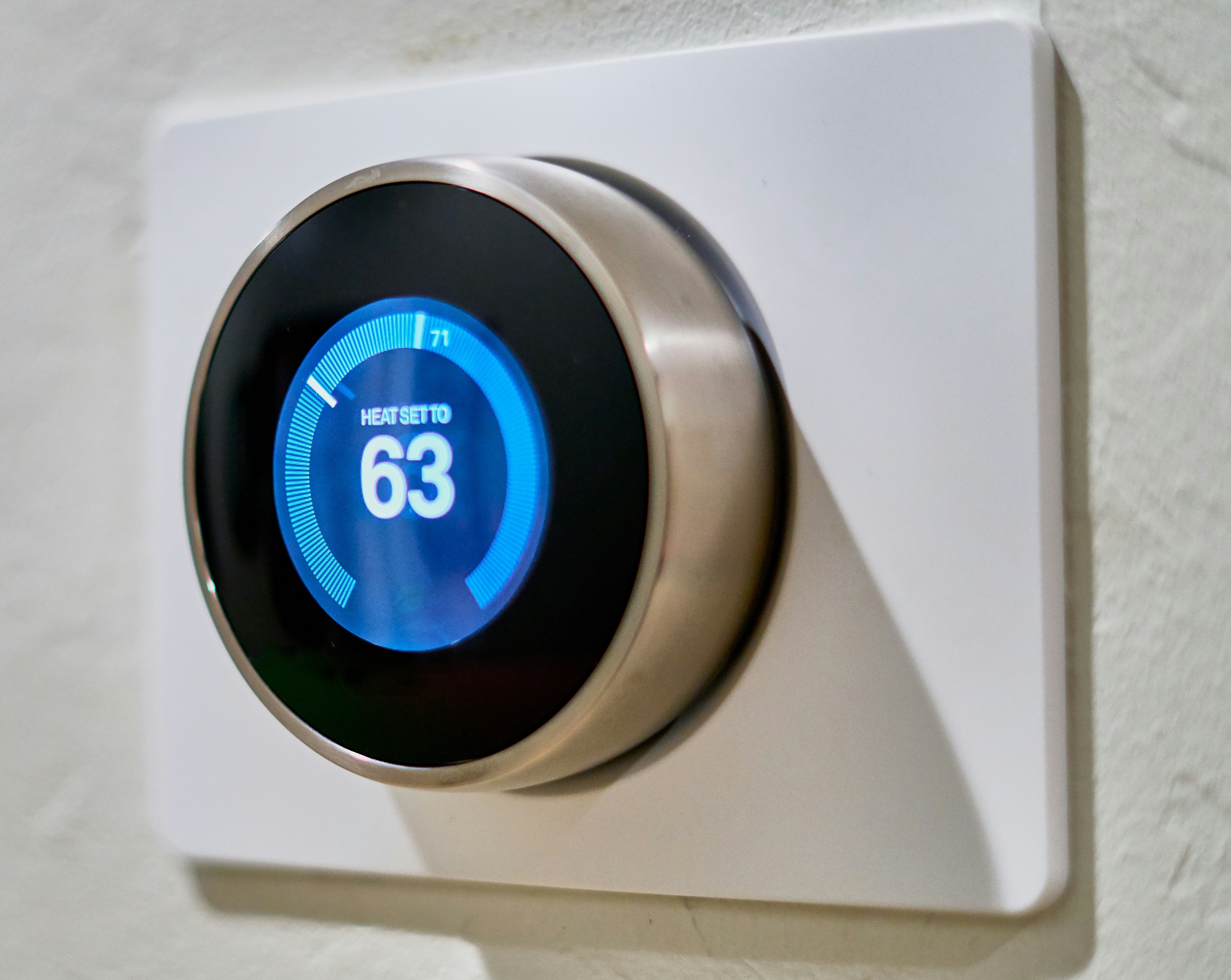
From Smart Data to Health Impacts: Thermal Simulation of Indoor Environments in UK Cold Homes
Cold homes in the UK pose a major public health crisis, causing respiratory and mental health issues while burdening the NHS. Identifying vulnerable households remains difficult, leading to inefficient policy support.

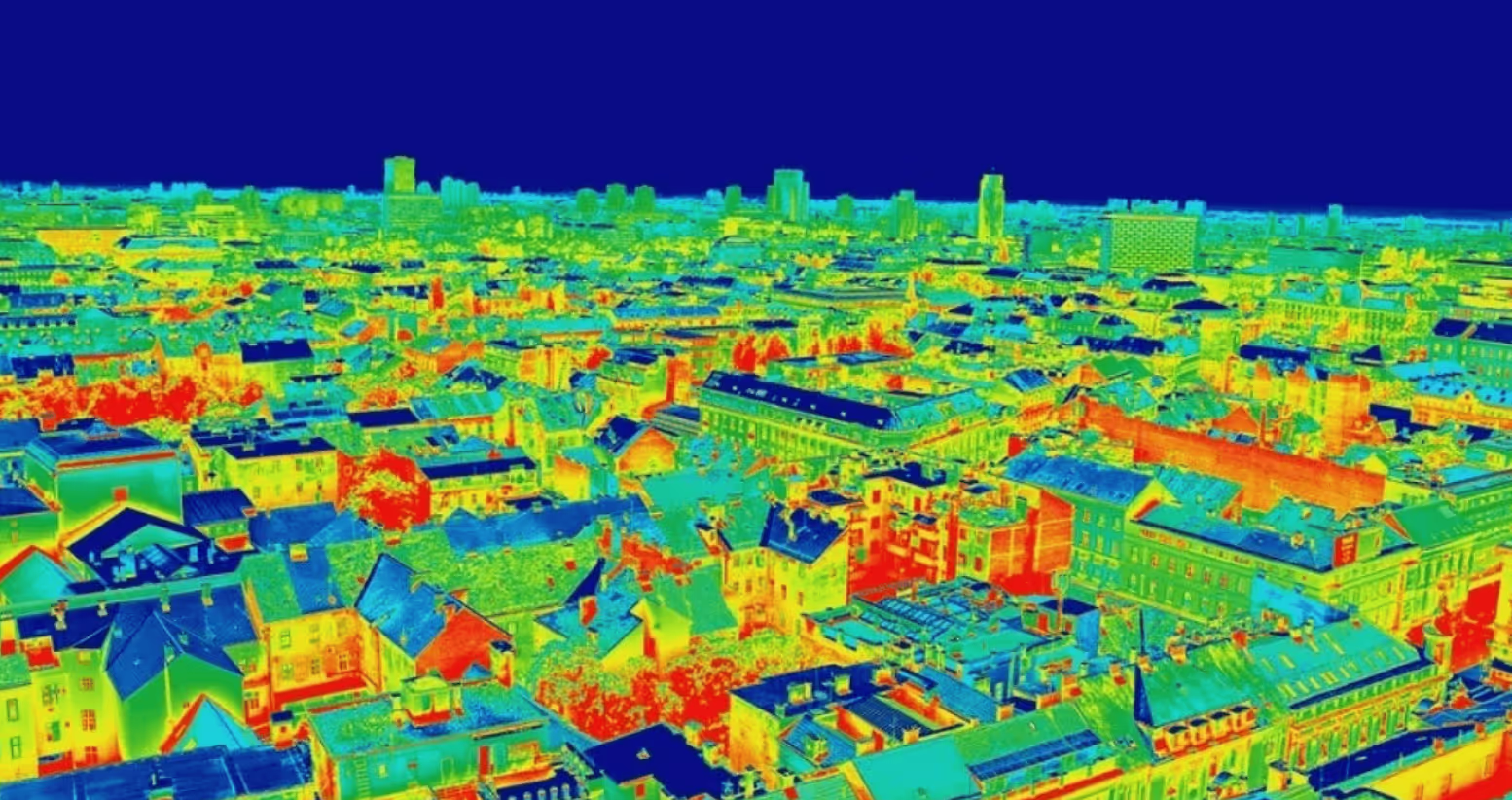
Urban Remote Sensing
Remotely sensed images and the corresponding analytical techniques offer a comprehensive approach to observing and monitoring urban environments in real-time through high spatial-temporal-spectral-resolution data.
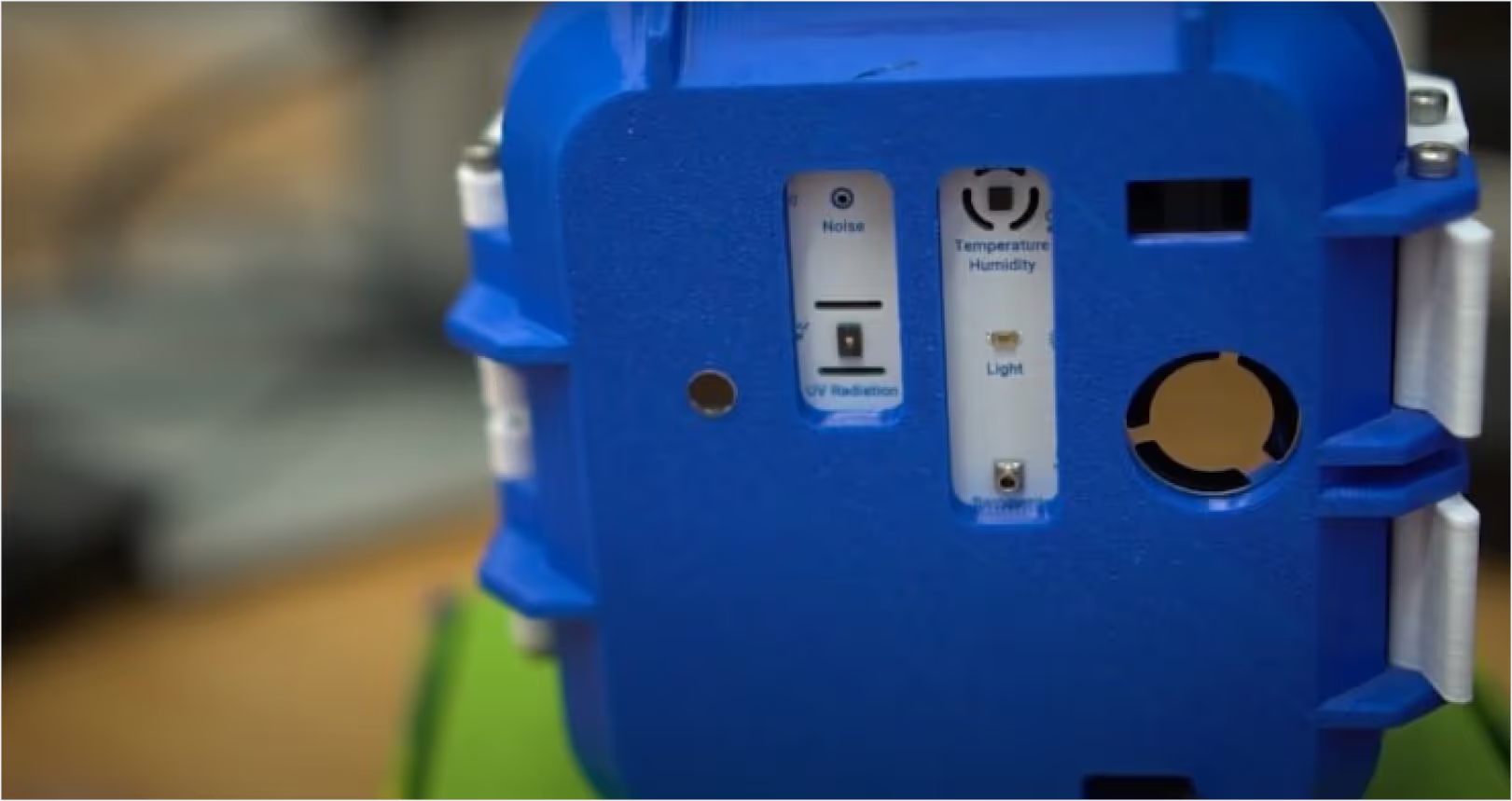
Sensor-enhanced Housing Surveys
This project seeks to develop a framework for using and collecting data from a range of home-based sensors to understand human health and fuel poverty.
Building housing energy efficiency models from local sensing
Decarbonising domestic heating is a central challenge for the sustainability agenda - requiring fundamental changes in home heating systems and major upgrades in the thermal performance of the existing building stock to reduce energy consumption.
From Smart Data to Health Impacts: Thermal Simulation of Indoor Environments in UK Cold Homes
Cold homes in the UK pose a major public health crisis, causing respiratory and mental health issues while burdening the NHS. Identifying vulnerable households remains difficult, leading to inefficient policy support.
Currently, there are no projects
news
Latest News from the Centre
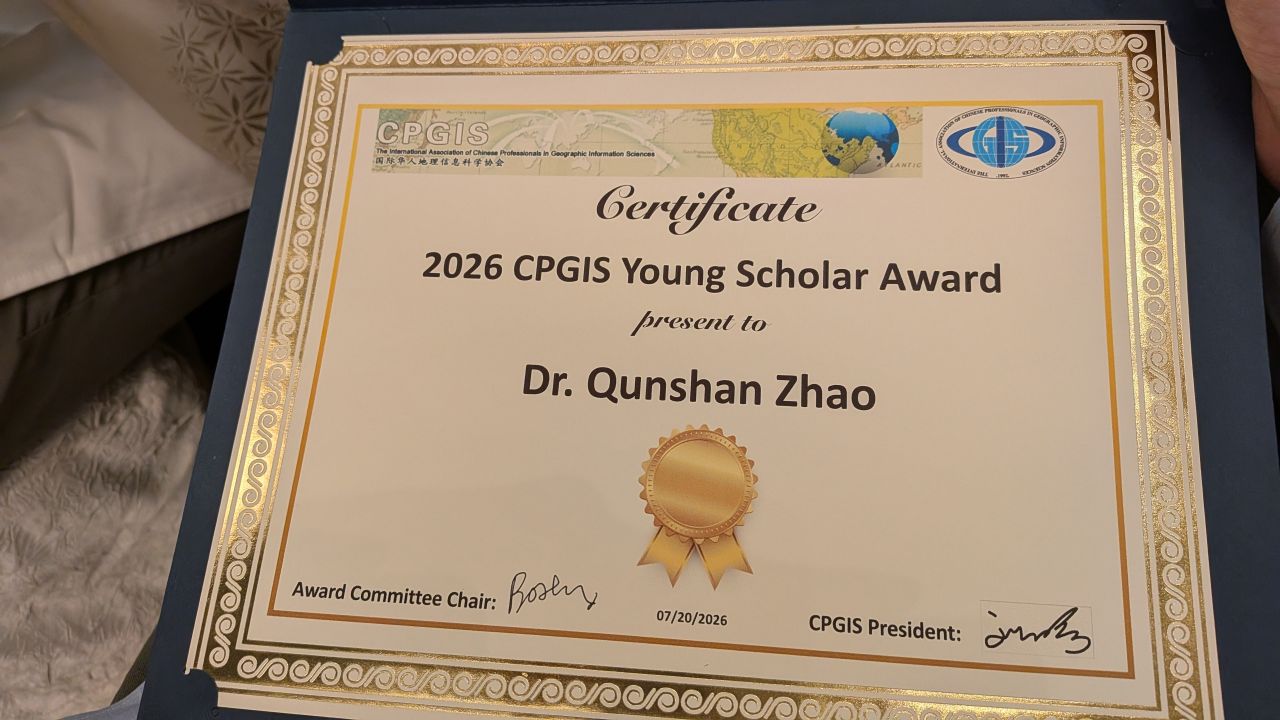
Professor Qunshan Zhao wins prestigious Young Scholar Award
Professor Qunshan Zhao has received a prestigious CPGIS Young Scholar Award for exemplary commitment to research and higher education.
New energy efficiency framework to address global net-zero carbon agenda
A new way of classifying energy efficiency that could benefit households and address the global net-zero carbon agenda has been developed by the Universities of Glasgow and Cambridge.
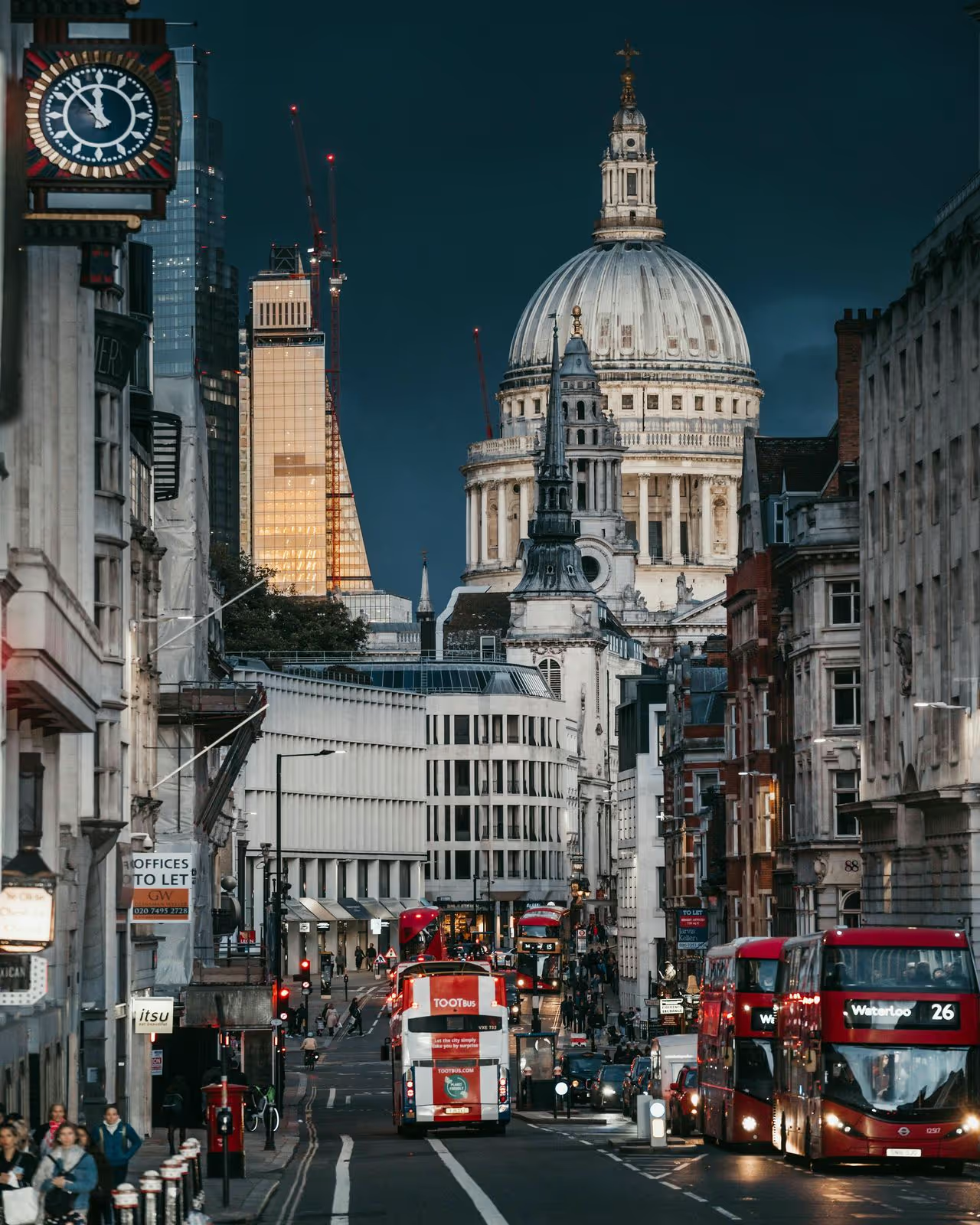
The slow demise of the sustainable city?
With commuting frequencies falling as hybrid working becomes the norm for many, are people still prepared to pay a premium for houses with better public transport services? If not, what does this say about the future shape of our cities? A recent paper by Dr. Michail Georgiou, Professor Nick Bailey and Dr. Jose Rafael Verduzco-Torres at UBDC address this key question.
Publications
Recent publications
Transportation and process modelling-assisted techno-economic assessment of resource recovery from non-recycled municipal plastic waste.
Integrated geospatial methods for multilingual cities: Combining GPS, electronically activated recorder, and map-based ethnographic interviews.
Meet our team and join the UBDC Community
At UBDC, you’ll join an international community of researchers, data scientists, social scientists and innovators using data and AI to understand and improve urban life. Our team brings together diverse expertise and perspectives to tackle the complex challenges facing cities worldwide.
Visit our people pages to meet the researchers, technical specialists and partners who make UBDC a leading centre for urban analytics and AI. Be part of our vibrant community by following our updates, sharing insights and engaging in conversations about data innovations and AI in urban policy.

Jointly funded by
%20copy.avif)
.avif)
