
New energy efficiency framework to address global net-zero carbon agenda


.svg)
.svg)

A new way of classifying energy efficiency that could benefit households and address the global net-zero carbon agenda has been developed by the Universities of Glasgow and Cambridge.
In the UK, 28 million households consume 25% of the total energy and contribute to 25% of the carbon emissions. Focusing on sustainability and energy efficiency within the building sector is vital if the UK is to achieve its 2050 net zero target. Yet traditional methods are time-consuming, labour-intensive, and expensive.
Now research led by the Universities of Glasgow and Cambridge demonstrates how external building data and deep learning can be leveraged to assess building energy efficiency in a large scale, based on building energy performance datasets from Glasgow and Edinburgh.
This novel framework has the potential to be applied globally to address the net-zero carbon agenda for sustainable living in the future.
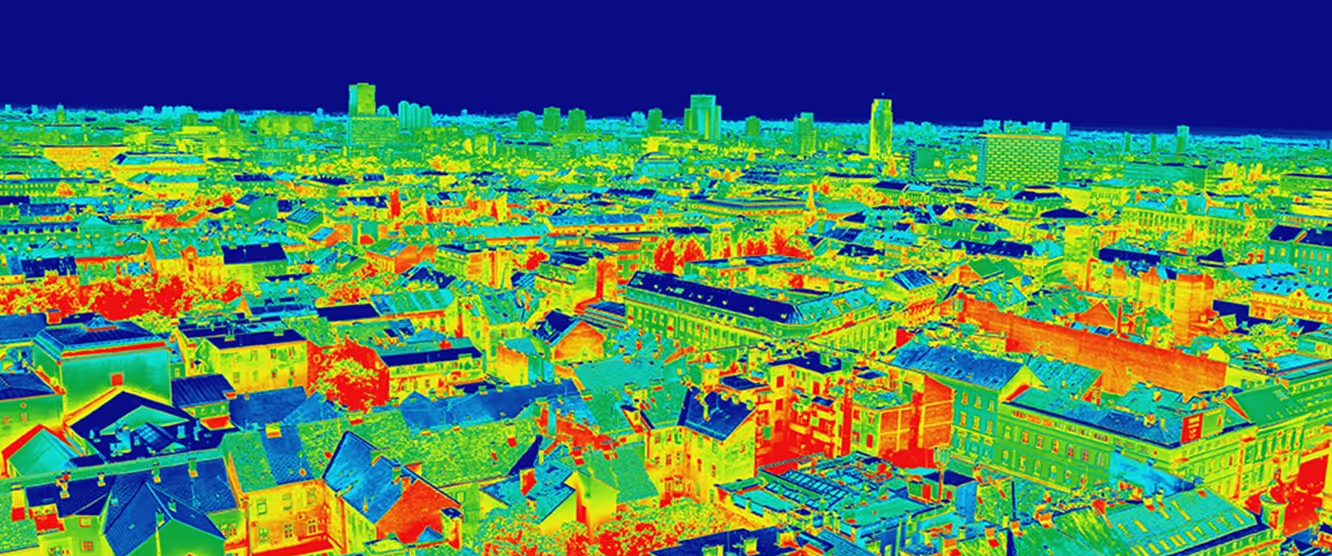
Further predictions and analyses from the research reveal a surprising correlation between neighbourhood-level building energy efficiency and socioeconomic deprivation, suggesting that more deprived neighbourhoods in the two Scottish major cities tend to have better building energy efficiency than the most affluent area.
This highlights the effectiveness of the target housing retrofitting intervention programme running in the Scotland.
Research lead Professor Qunshan Zhao said: "Over recent years, we have seen advancements in high-resolution satellite/aerial thermal infrared images, street view images, widely available building attributes, and deep learning methodologies that all offer vast potential to estimate building energy efficiency at a large scale.
"Our research demonstrates that these methods can indeed provide valuable information, not only about visible attributes like building style but also about intrinsic characteristics such as energy efficiency. By combining multi-source image data with building characteristics and socioeconomic factors, our study achieved relatively high performance in estimating property-level energy efficiency.
"We hope that this study will have an impact on how we build energy efficient properties – especially as we adjust to the worsening effects of global climate change."
Although the research has taken place in two Scottish cities as a pilot, it has the potential to be applied globally, subject to data availability.
The obvious next step is to take this approach to the major UK cities, and the results will help inform the targeted housing retrofitting programme more accurately in the future.
Files
Latest news
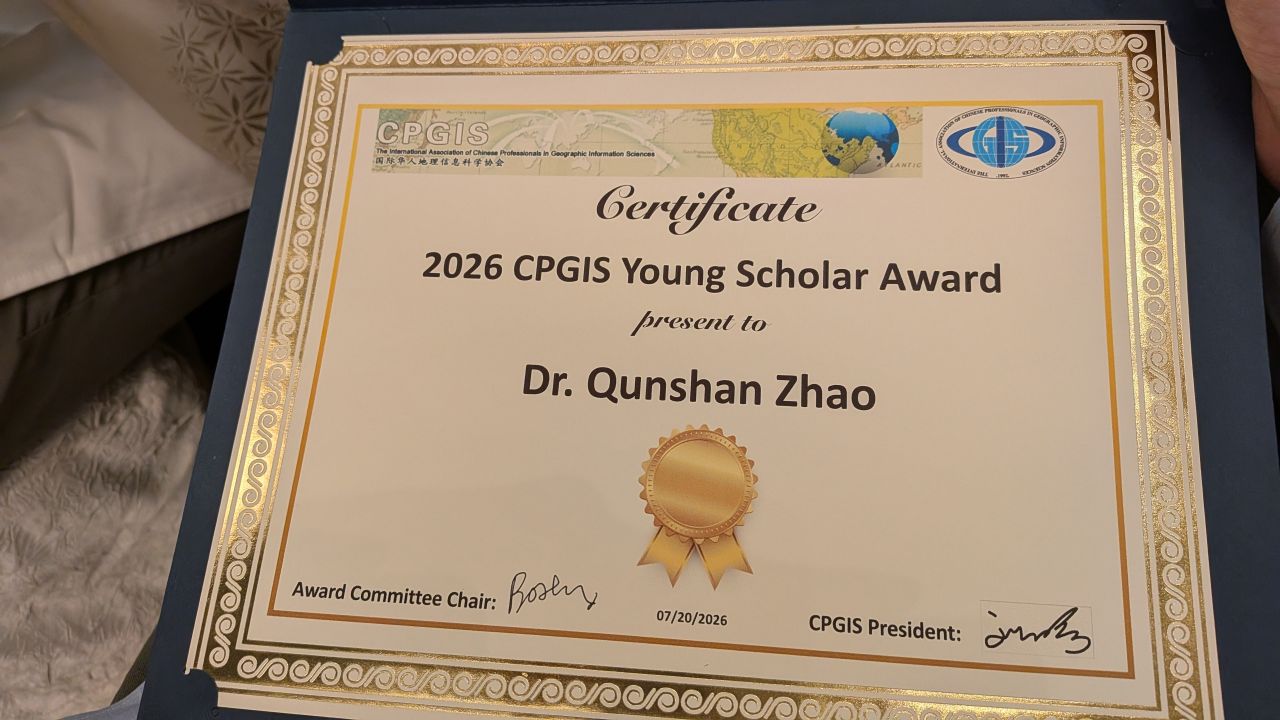
Professor Qunshan Zhao wins prestigious Young Scholar Award
Professor Qunshan Zhao has received a prestigious CPGIS Young Scholar Award for exemplary commitment to research and higher education.
%201.svg)

Our co-created mapping guide featured as a guiding principle for responsible AI integration
A community-led mapping methodology co-developed by the University of Glasgow and partners has been recognised in a flagship international AI report, demonstrating how responsible AI can strengthen participatory approaches to multi-hazard early warning systems.

UBDC presents at the World Urban Forum 2026
The Urban Big Data Centre and Partners had a remarkable participation at the latest Would Urban Forum (WUF) in Baku, Azerbaijan. Within the topic “Housing the world: Safe and resilient cities and communities”.
Jointly funded by
%20copy.avif)
.avif)
