
How investing in energy efficient homes pays back – twice!

.svg)
.svg)

A new study published in the journal Energy and Buildings reviews the evidence from across Europe on the impact of energy efficiency on house prices. It shows that more efficient properties are not only cheaper to run, they are also worth more when you come to sell.
The ongoing climate emergency as well as the energy crisis have thrown a spotlight on the energy efficiency of our homes. Improving energy efficiency can bring immediate financial rewards for households in lower fuel bills as well as environmental benefits and better living conditions. But the upfront cost of work may deter households from taking the necessary measures. And many are concerned that, if they sell, they won’t get the benefit of this investment.
Energy Performance Certificates (EPCs) were introduced in the UK and across the EU to encourage investment in energy efficiency measures by making the lower running costs visible to potential buyers or renters. Using a system of colour-coded bands as well as more detailed measurements, the intention was that more efficient properties ought to attract a higher price or rent.
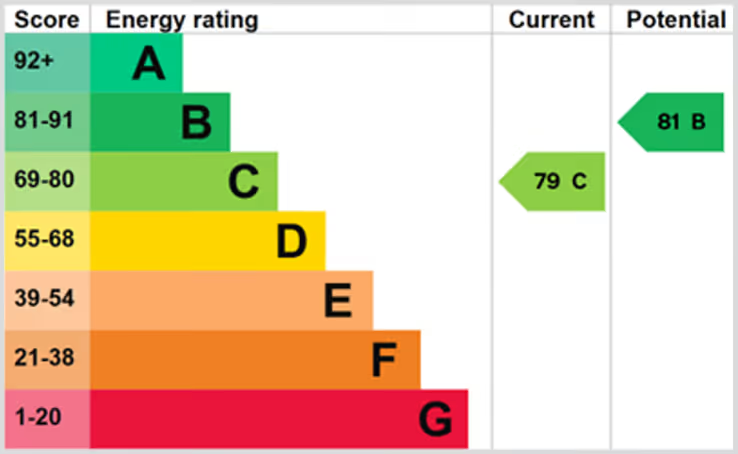
The EPC system certainly has its flaws and there are ongoing debates about how to reform it [1]. But the question of whether people do pay attention to the EPC ratings remains: are they willing to pay more to buy or rent a property where running costs are expected to be lower?
Our methodology
We conducted a review of all the published evidence we could find from across Europe which measured the impact of EPC ratings on house prices or rents. We took a systematic approach to identify all relevant studies published in academic journals in English – a total of 68 papers from 12countries, reporting the results of 111 separate analyses.
What we found
Across the UK and the EU, energy efficiency is valued in the housing market. There is a clear gradient of prices across EPC bands, showing a market preference for more energy-efficient homes. Each additional EPC band is worth about 1%-3% in price increase.
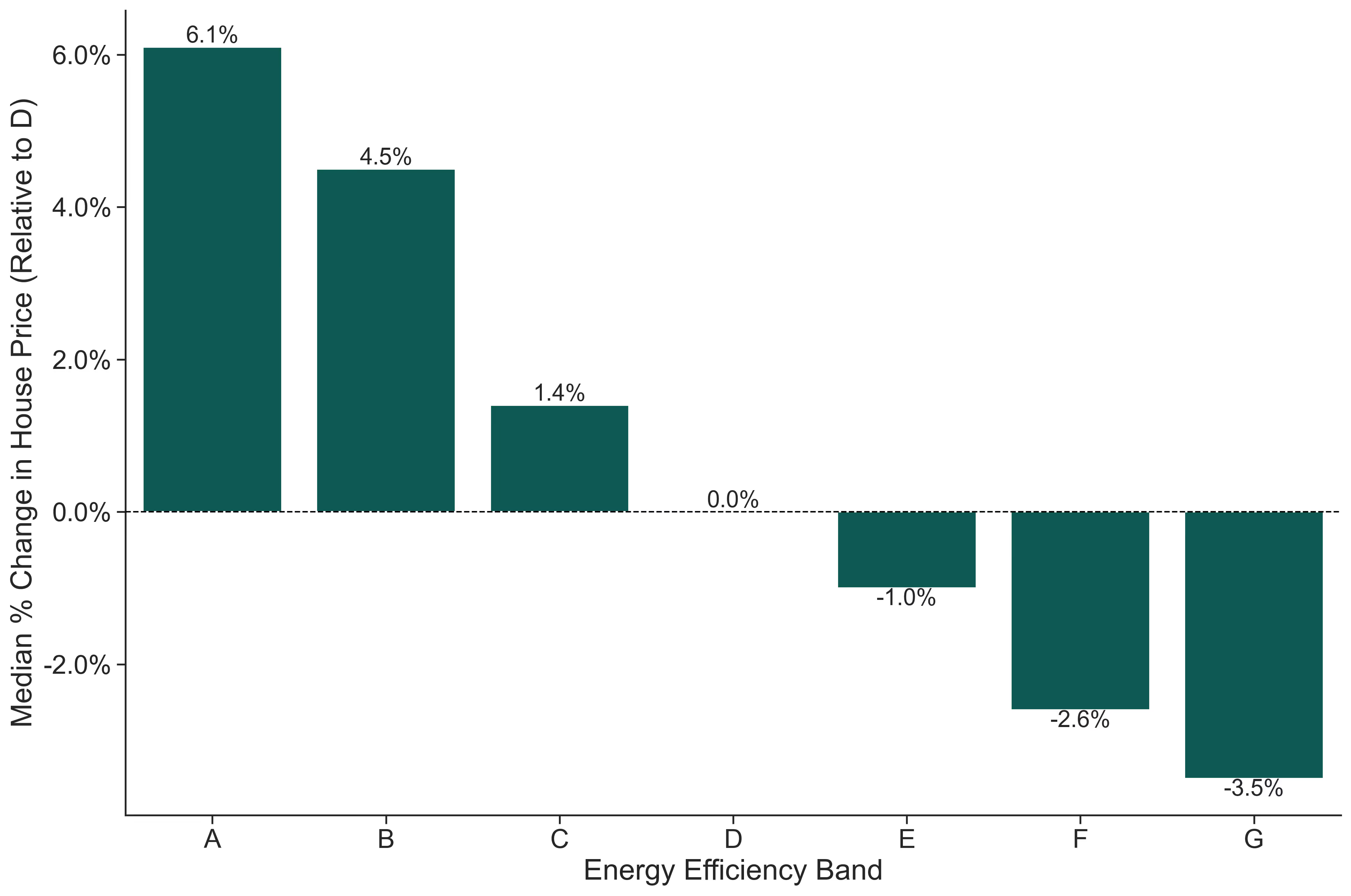
The price premium for energy efficiency appears to be greater for houses than for flats, and for sales than for rentals. We did not find much variation in the price premium between northern and southern Europe despite very different climates. Nor did we find evidence that the premium for energy efficiency increased after 2016. Very few published studies cover the period since the energy price increases of 2022 so we could not examine the effects of those.
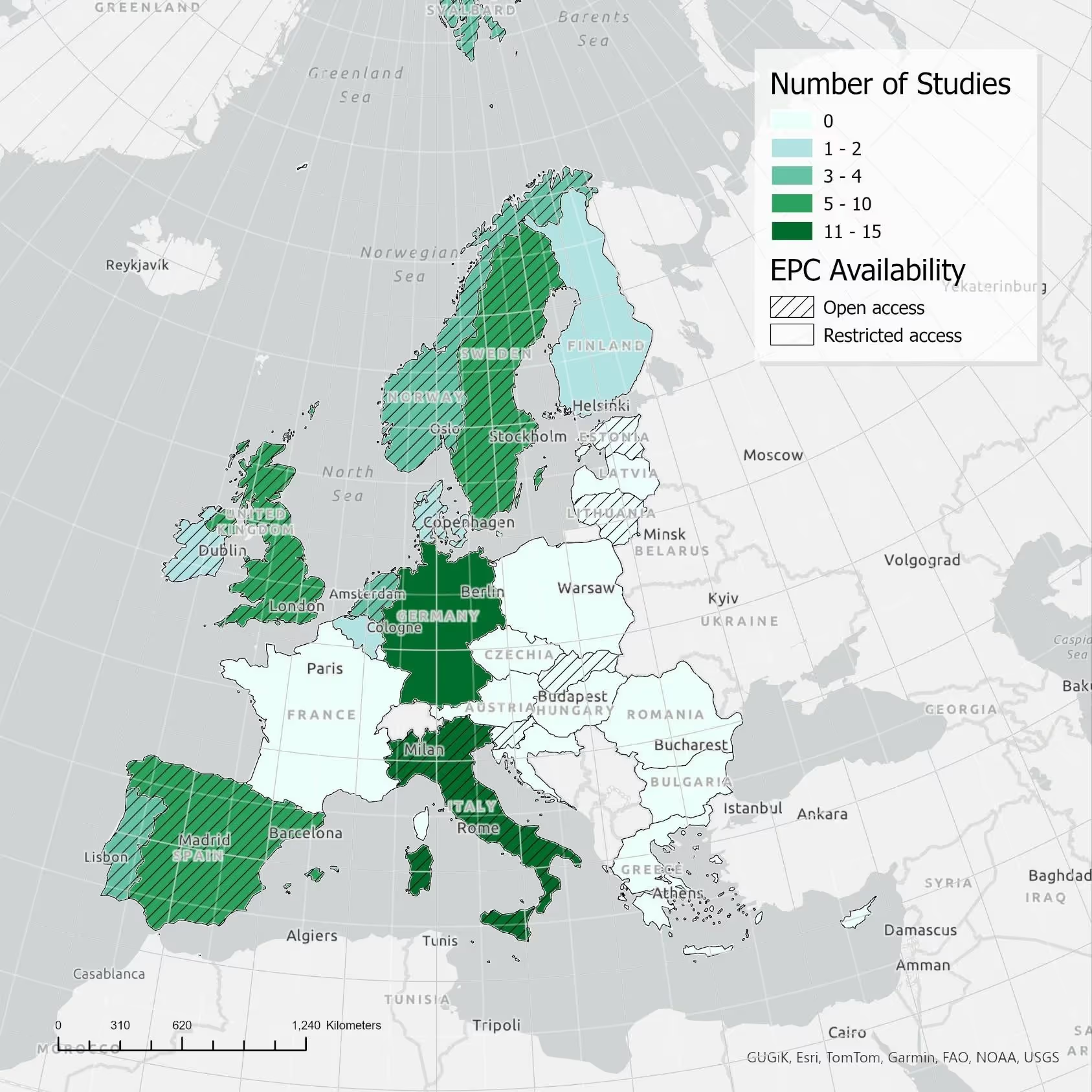
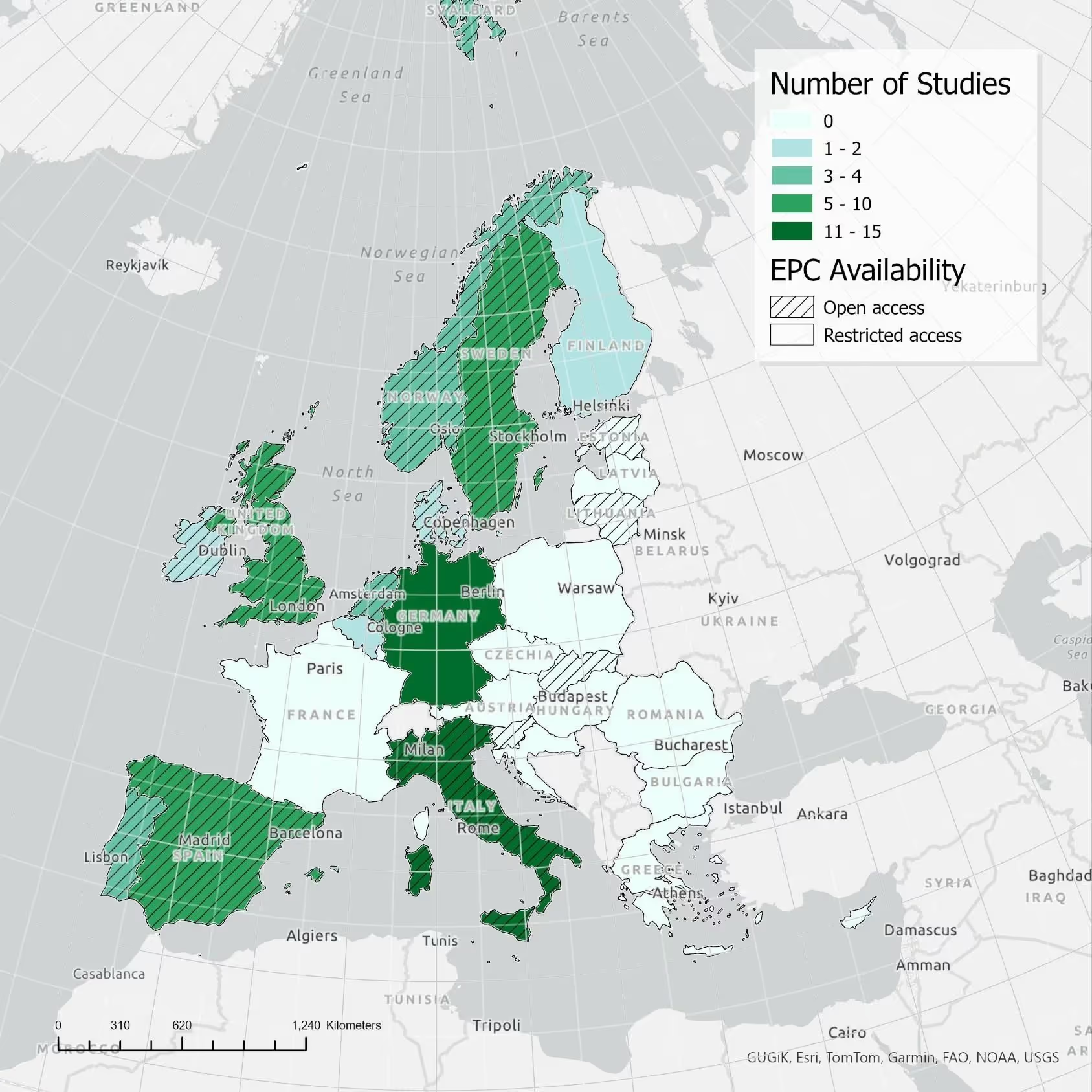
The studies we found span northern, western, and southern Europe, but there is a gap in the evidence (in English) across central and eastern Europe. In addition, studies tend to be concentrated into a small number of counties. A key factor here appears to be the public availability of EPC data to enable the analysis of housing market effects. There are 13countries where EPC data are publicly available, and they account for about 80%of the identified studies. Among the 18 countries with no publicly available data, there are no identified studies for 15 of them.
Key takeaways
· Whatever the limitations of the current system, EPCs do influence the behaviour of people in the housing market. People are prepared to pay more to buy or rent more efficient properties, as identified by EPC bands and ratings. Owners can be reassured that they will gain from lower running costs and from a high sale value.
· The evidence should be particularly useful for private landlords as it shows they benefit from investing in energy efficiency in similar ways to owner occupiers. They may not get the same direct benefit of lower energy bills for their own household but they should get a better rent and a higher value property.
· This work demonstrates the value of making data open where appropriate. Most of the countries that made EPC data open now have a significant evidence base to guide policy development ,much of it from independent academic research.
· Our work focussed on studies in English in academic journals. There would certainly be value in trying to identify additional studies which could add to this evidence base but we believe this paper makes an important and substantial contribution.
· There would be value in updating the evidence base to examine whether the price premium for energy efficiency has increased since the energy price crisis of 2022.
Acknowledgements
This work was funded by the ESRC-funded Advanced Quantitative Methods (AQM) Doctoral Studentship [ES/P000681/1] and ESRC’s on-going support for the Urban Big Data Centre [ES/L011921/1 and ES/S007105/1].
Team: Yunbei Ou, Nick Bailey, David Philip McArthur, Qunshan Zhao
[1] UK Government: https://assets.publishing.service.gov.uk/media/679a5d7f61c295e9331f78a1/EPBR_Consultation_Impact_Assessment.pdf
Scotland: https://www.gov.scot/news/reforming-energy-performance-certificates/
Files
Latest news

Professor Qunshan Zhao wins prestigious Young Scholar Award
Professor Qunshan Zhao has received a prestigious CPGIS Young Scholar Award for exemplary commitment to research and higher education.
%201.svg)

Our co-created mapping guide featured as a guiding principle for responsible AI integration
A community-led mapping methodology co-developed by the University of Glasgow and partners has been recognised in a flagship international AI report, demonstrating how responsible AI can strengthen participatory approaches to multi-hazard early warning systems.

UBDC presents at the World Urban Forum 2026
The Urban Big Data Centre and Partners had a remarkable participation at the latest Would Urban Forum (WUF) in Baku, Azerbaijan. Within the topic “Housing the world: Safe and resilient cities and communities”.
Jointly funded by
%20copy.avif)
.avif)
