
Indoor environment and energy use study


.svg)
.svg)

As energy costs rise and fuel poverty increases, UBDC - in collaboration with Understanding Society, the UK Household Longitudinal Study - is launching a new study to provide linked-data on energy usage and indoor environment via smart-meter readings and indoor integrated-sensors.
The aim is to pilot indoor-environmental sensors in a representative sample of Understanding Society volunteer households, alongside longitudinal energy data from smart-meters, weather and building energy-efficiency data, to provide a comprehensive dataset on living environments and energy use to support a range of innovative analyses.
The project aims to:
Establish a methodology for recruiting participants, collecting and linking the following data at reasonable cost: indoor air temperature, humidity, air quality; home energy consumption; weather; building energy efficiency; and additional survey data.
Analyse these data to examine the longitudinal relationship between energy consumption, indoor environment, building performance, socio-demographics; and outcomes including health, financial wellbeing and fuel poverty.
Professor Qunshan Zhao, from the Urban Big Data Centre at the University of Glasgow said: “We know that indoor environment in our homes can be different according to where we live, even in different homes in the same street. The air can contain different levels of components (such as carbon dioxide, different VOCs [Volatile organic compounds], etc.) and microscopic particles. These variations in air quality, as well as things like air temperature, relatively humidity, noise levels and light levels, may affect our physical and mental health, and might affect different people in different ways, especially for elderly and children.
“To better understand how conditions inside people’s homes vary, volunteer households have been asked place an environmental sensor in their homes for 3-6 months. Information collected by these sensors would be linked to the survey responses, the house energy performance certificate if it exists, and smart metre readings you have given in this study.
“The results will be analysed and linked to associated written/online survey answers to enable valuable academic research on the physical and mental health of different types of households.”
Sensors are being distributed to participants and this short video explains how to unpack, activate and power the sensor supplied by the Urban Big Data Centre. The contact email for participants is: sensorhousingsurvey@glasgowctu.org
Further details about this project can be found at these links: In Home Sensors and Smart Data Linkage.
Files
Latest news
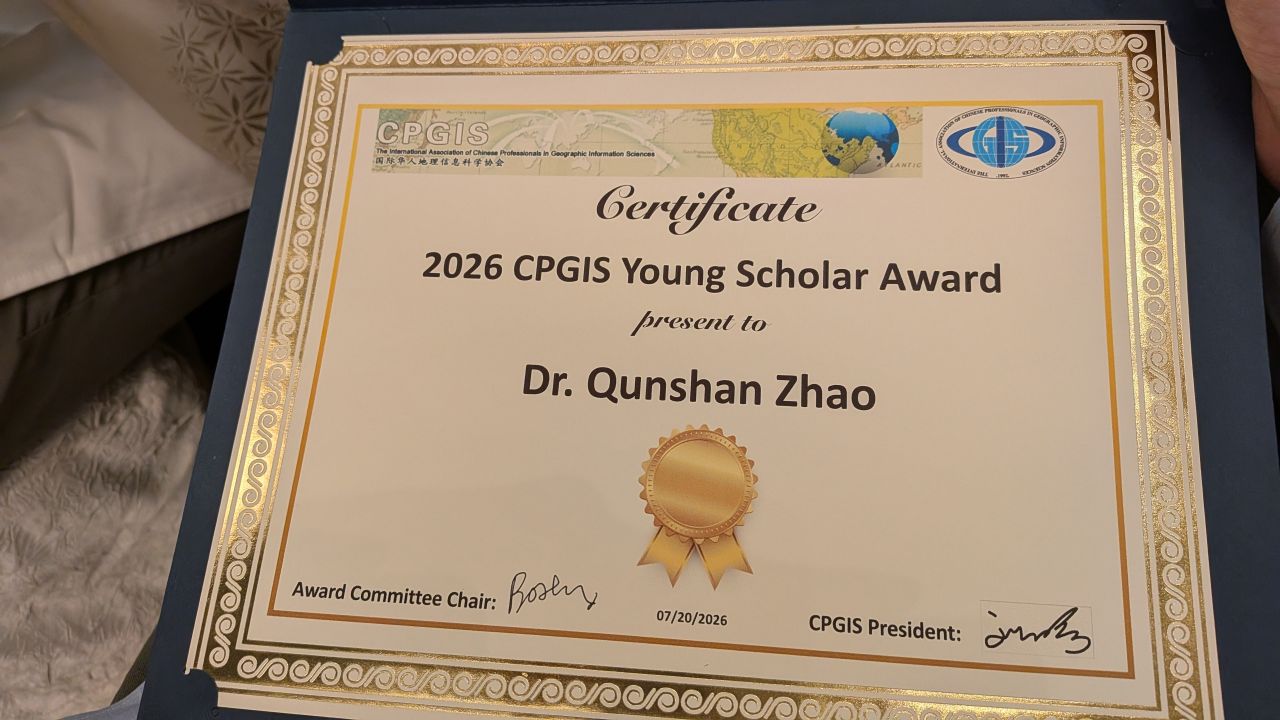
Professor Qunshan Zhao wins prestigious Young Scholar Award
Professor Qunshan Zhao has received a prestigious CPGIS Young Scholar Award for exemplary commitment to research and higher education.
%201.svg)

Our co-created mapping guide featured as a guiding principle for responsible AI integration
A community-led mapping methodology co-developed by the University of Glasgow and partners has been recognised in a flagship international AI report, demonstrating how responsible AI can strengthen participatory approaches to multi-hazard early warning systems.

UBDC presents at the World Urban Forum 2026
The Urban Big Data Centre and Partners had a remarkable participation at the latest Would Urban Forum (WUF) in Baku, Azerbaijan. Within the topic “Housing the world: Safe and resilient cities and communities”.
Jointly funded by
%20copy.avif)
.avif)
