
UBDC research to reduce climate change impacts on health and wellbeing in Brazil’s favelas

.svg)
.svg)


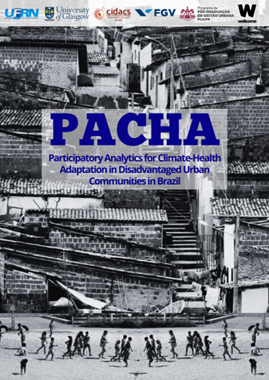
Research led by the UBDC is aiming to reduce climate change impacts on health and wellbeing in Brazil's favela urban communities.
Although disproportionately affected by the impacts of climate change, disadvantaged urban communities face compounded climate and data injustices, remaining largely invisible in official data and decision-making processes.
The PACHA (Participatory Analytics for Climate-Health Adaptation in Disadvantaged Urban Communities in Brazil) project will inform city adaptation implementations by combining climate and health data, analysis of impacts and vulnerabilities, and participatory action research with affected communities to translate lived experiences into citizen data.
PACHA has received £2.5 million from the Wellcome Trust and is led by Professor João Porto de Albuquerque, Director of the University of Glasgow’s Urban Big Data Centre. The project consortium includes four Brazilian institutions: Fundacao Getulio Vargas, Centre for Integration on Health Data of Fundacao Oswaldo Cruz (CIDACS/Fiocruz), Pontifical Catholic University of Paraná (PUCPR) and Federal University of Rio Grande do Norte (UFRN).
It will address three main gaps in evidence and capacity that could lead to community needs and lived experiences being overlooked by city governments, resulting in ineffective “maladaptation”:
Evidence gap:
Brazil is one of the few countries globally that consistently records deprived urban neighbourhoods - known as Favelas and Urban Communities (FUC). Census data released at the end of 2024 provide geospatial socio-demographic data for 12,348 FUCs in 676 municipalities, housing 16.39 million people. Combined with other health data, this represents an unparalleled opportunity to drive urgent policy and practice on climate-health adaptation. However, community-level data on hazards are missing, whilst health impact data on these urban communities are siloed in several governmental databases or aggregated at the city level, thus hampering effective targeting of municipal interventions.
Insufficient community voice:
Many cities lack effective processes for engaging affected urban communities in adaptation planning and implementation. Urban communities have developed decades of knowledge on their territories, including powerful strategies for mobilisation and resilience. Insufficient engagement with these communities risks neglecting local knowledge and agency essential for effective interventions.
Lack of capacity for coordinated action:
There are initiatives in Brazil aimed at climate adaptation, improving urban infrastructure, and addressing health inequalities. However, there is a lack of capacity to integrate knowledge and people from these different initiatives at city level to generate action-oriented knowledge, address trade-offs and enable the translation of data into transformative, evidence-informed climate-health adaptation.
Professor de Albuquerque said: “Brazil is one of the few countries globally that consistently records deprived urban neighbourhoods, who disproportionately suffer from climate change effects whilst contributing the least to it. With the eyes of the world on Brazil during COP30, this is a huge opportunity to raise awareness of those who are facing barriers due to political marginalisation and insecure tenure, causing their needs and vulnerabilities to be frequently overlooked in urban planning and climate adaptation.
“The under-representation in existing data and evidence leads to unequal health outcomes for community residents. If the right action isn’t taken now, then the double burden of deprivation and climate vulnerability will continue to widen inequalities, pushing disadvantaged urban residents into deeper cycles of poverty and ill-health.”
The PACHA project is a transdisciplinary partnership between urban community leaders, policymakers, social scientists, climate scientists and health researchers to reveal and reduce climate-health impacts using a place-based focus on favela communities, and a gender, race and age-sensitive intersectional lens. The PACHA consortium will work in close partnership with governmental agencies and community groups in three Brazilian cities (Curitiba, Natal, and Niterói) in Participatory Urban Living Labs, co-creating action-oriented research to inform the implementation of municipal climate adaptation towards equitable health outcomes for disadvantaged communities.
Files
Latest news
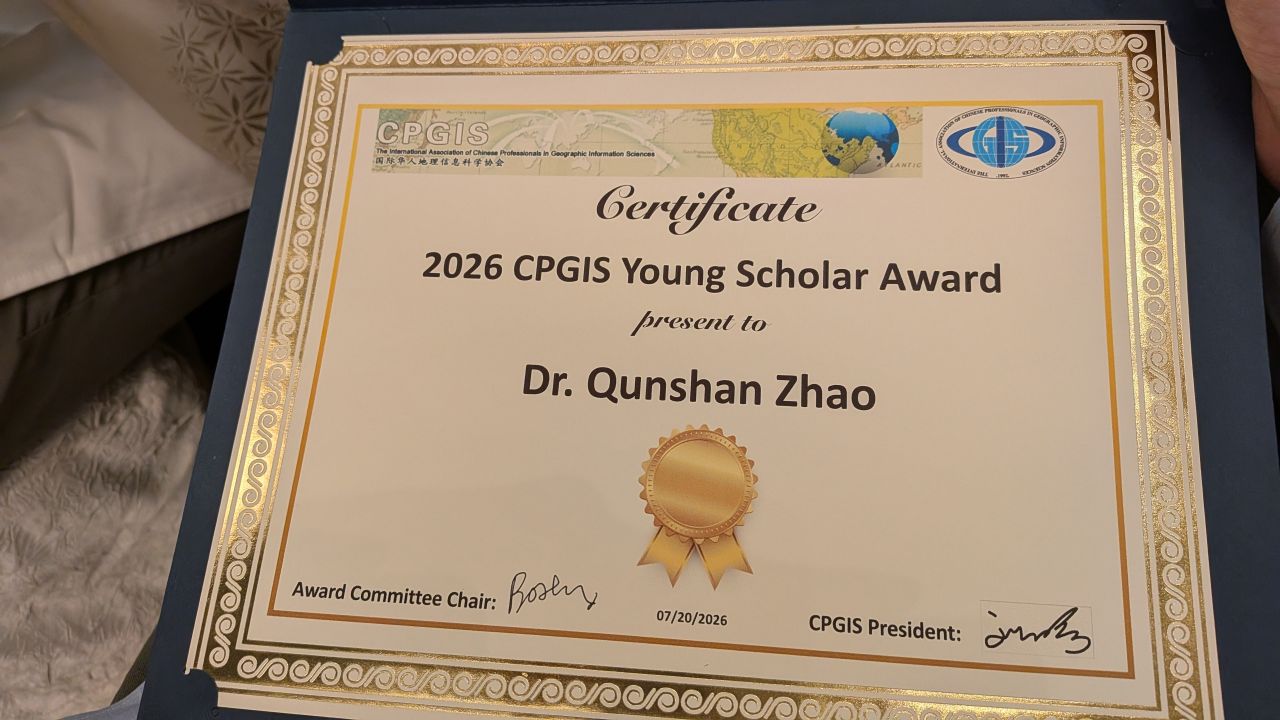
Professor Qunshan Zhao wins prestigious Young Scholar Award
Professor Qunshan Zhao has received a prestigious CPGIS Young Scholar Award for exemplary commitment to research and higher education.
%201.svg)

Our co-created mapping guide featured as a guiding principle for responsible AI integration
A community-led mapping methodology co-developed by the University of Glasgow and partners has been recognised in a flagship international AI report, demonstrating how responsible AI can strengthen participatory approaches to multi-hazard early warning systems.
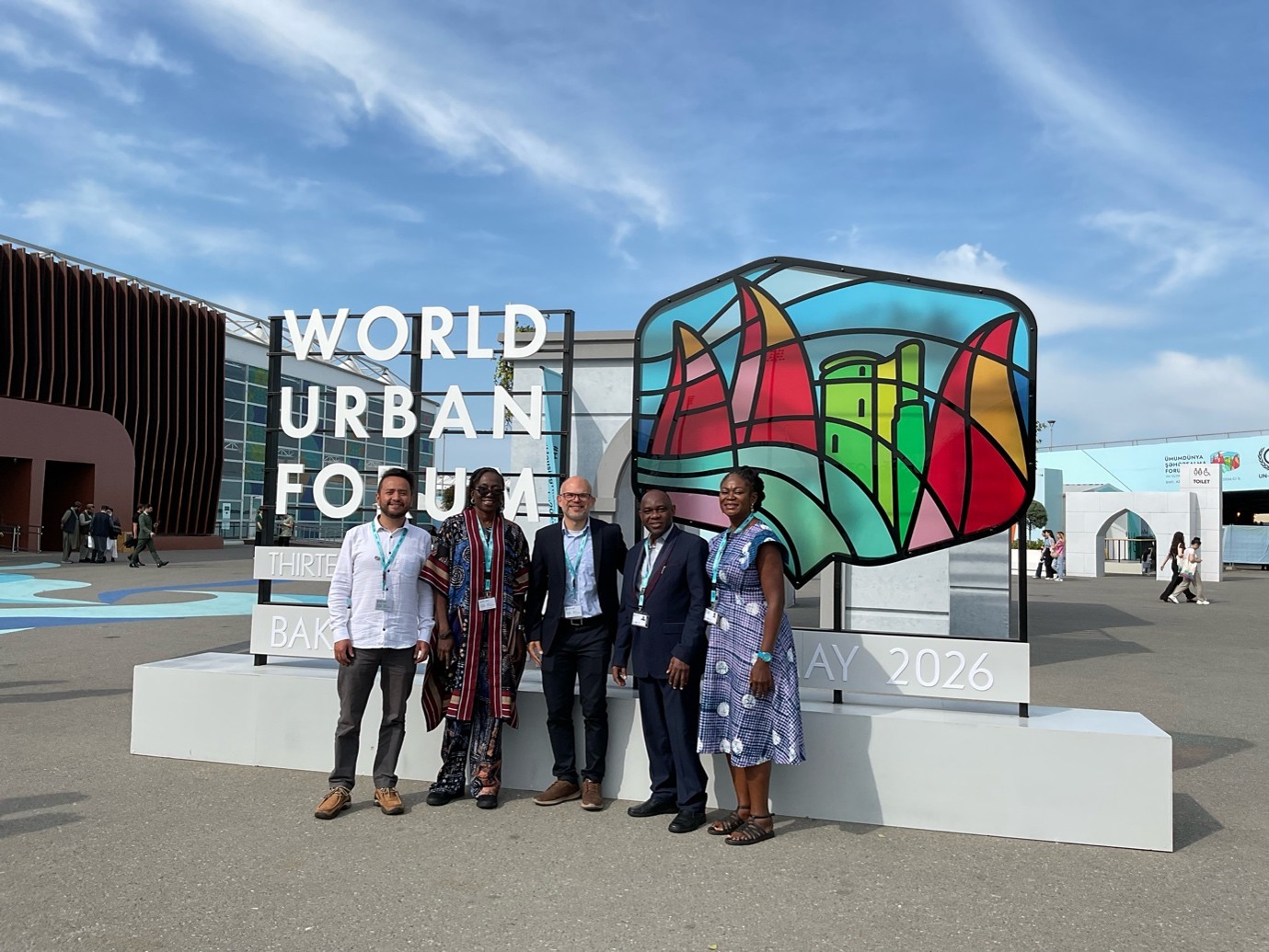
UBDC presents at the World Urban Forum 2026
The Urban Big Data Centre and Partners had a remarkable participation at the latest Would Urban Forum (WUF) in Baku, Azerbaijan. Within the topic “Housing the world: Safe and resilient cities and communities”.
Jointly funded by
%20copy.avif)
.avif)
