
How online real estate agencies are changing the housing market


.svg)
.svg)

A team of researchers have used Zoopla Property data from the UBDC data service to analyse how online real estate agencies are affecting the UK housing market.
In this blog, Cigdem Gedikli (Swansea University, UK), Robert Hill (University of Graz) Oleksandr Talavera (University of Birmingham), Okan Yilmaz (Swansea University) outline the findings from their paper.
Introduction
Selling a home can be stressful and costly. But the rise of online real estate agencies is transforming the process, making transactions faster and often more accurate in pricing. By “online real estate agencies,” we mean companies that operate entirely online without local offices. Unlike traditional agencies, which rely on physical branches and local knowledge, online agencies communicate with sellers mostly through their websites and typically charge a fixed upfront fee rather than a percentage of the sale price. Sellers can also choose flexible service packages; for example, taking their own photos or hosting viewings themselves, which helps reduce costs. Our research explores how these online platforms compare with traditional agencies and what this shift means for sellers, agencies, and the housing market overall. Understanding these dynamics can help homeowners make smarter decisions and encourage innovation in real estate services.
Background
The idea for this research came from the rapid growth of online platforms in other sectors, like ride-sharing and short-term rentals, and the noticeable rise of online real estate platforms. While online agencies now handle a substantial share of property listings, little research has examined how their business model affects market outcomes. Our study addresses this gap by analysing property sales data and comparing the performance of online versus traditional real estate agencies.
Progress So Far and Insights
Our analysis reveals striking differences. Properties listed through online agencies sell faster and tend to achieve prices closer to the initial list price. For homes that sell below the list price, online agencies minimise the discount, while for properties that sell above the list price, they maximise gains from competitive offers. In short, online agencies help sellers convert properties into cash more efficiently while better reflecting their true value.
Interestingly, online agencies also influence traditional agencies. As online market share grows in a region, traditional agencies improve their performance, selling homes faster and adjusting fees. This “spillover effect” suggests that competition from online platforms drives innovation and efficiency across the whole market.
Why do online agencies perform better? One key factor could be their business model: fixed fees, not tied to the sale price, encourage competitive pricing. Additionally, online platforms often leave viewings to the seller, simplifying logistics and reducing time on the market. Online agencies have been most successful in the middle part of the market – between the 20th and 80th percentiles. For these properties, the lower fees of online agencies are most likely to outweigh any extra effort that traditional agencies might provide.
Future Plans
We plan to explore these dynamics further, investigating how the growth of online agencies affects different regions and price segments of the market. Future work will focus on long-term trends, potential impacts on housing affordability, and strategies for traditional agencies to adapt their service models. It may also be worthwhile to engage with real estate professionals, local authorities, and policymakers to discuss the implications of online disruption in the housing sector.
Conclusion
The rise of online real estate agencies represents a major shift in how properties are marketed and sold. For sellers, these platforms offer faster sales, more accurate pricing, and lower costs. For traditional agencies, the lesson is clear: adapt and innovate, or risk losing market share. As these platforms continue to expand, understanding their impact will be crucial for sellers, buyers, and policymakers alike. More broadly, the evolution of real estate services reflects a larger trend in which digital platforms disrupt traditional industries, improving efficiency and reshaping markets for everyone.
Files
Latest news
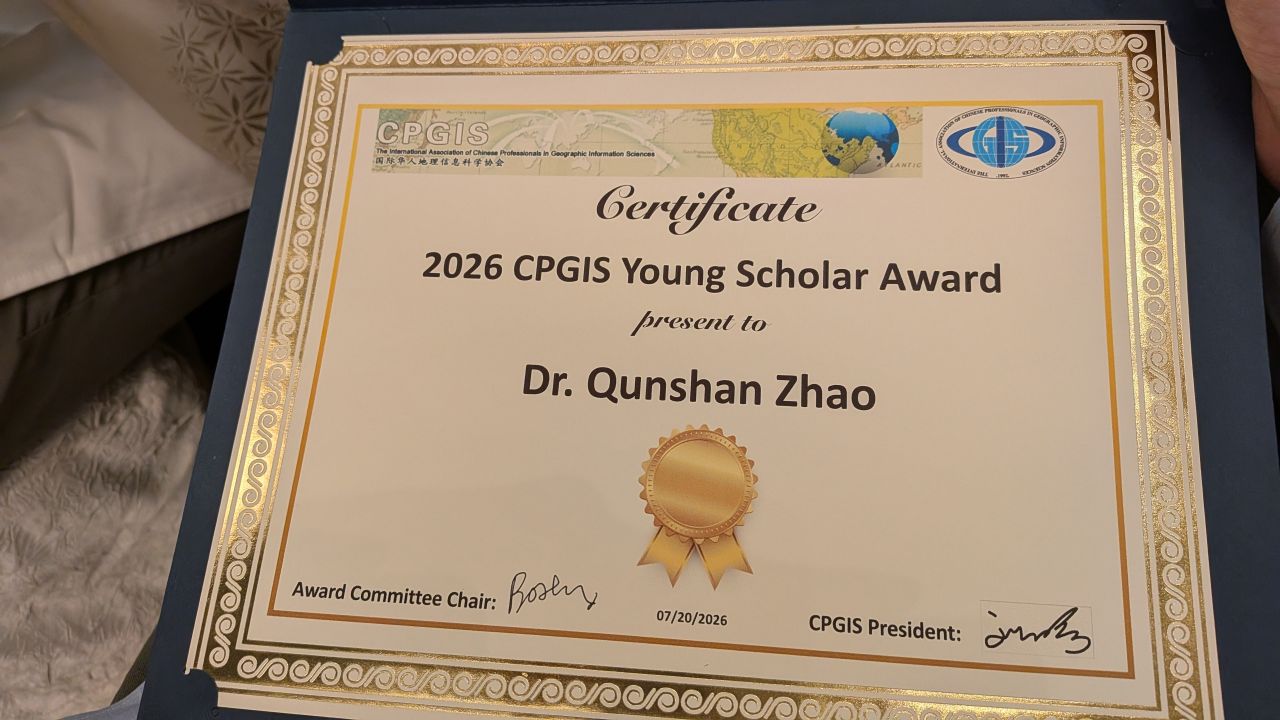
Professor Qunshan Zhao wins prestigious Young Scholar Award
Professor Qunshan Zhao has received a prestigious CPGIS Young Scholar Award for exemplary commitment to research and higher education.
%201.svg)

Our co-created mapping guide featured as a guiding principle for responsible AI integration
A community-led mapping methodology co-developed by the University of Glasgow and partners has been recognised in a flagship international AI report, demonstrating how responsible AI can strengthen participatory approaches to multi-hazard early warning systems.

UBDC presents at the World Urban Forum 2026
The Urban Big Data Centre and Partners had a remarkable participation at the latest Would Urban Forum (WUF) in Baku, Azerbaijan. Within the topic “Housing the world: Safe and resilient cities and communities”.
Jointly funded by
%20copy.avif)
.avif)
